
Rebuke Meaning in the Bible: Definition & Verse Examples

To “rebuke” in the Bible means to sharply correct someone, express strong disapproval, or command something to stop. People rebuke each other when they point out wrong behavior. Jesus rebuked storms, sickness, and evil spirits, using His authority to stop them. And God rebukes His people out of love, to bring them back to what is right.
In this article, we explain what “rebuke” means in simple words, look at the key verses, and share what the Bible teaches about giving and receiving correction in a loving way.
What Does "Rebuke" Mean in Simple Words?
To rebuke means to speak firmly to stop or correct something wrong. In the Bible, it is used in three main ways:
| Type of Rebuke | What It Means | Example |
|---|---|---|
| Correcting a person | Pointing out sin or a mistake | “If thy brother trespass against thee, rebuke him” (Luke 17:3) |
| Commanding with authority | Ordering something to stop | Jesus “rebuked the wind” (Mark 4:39) |
| God’s discipline | God correcting His people in love | “As many as I love, I rebuke and chasten” (Revelation 3:19) |
A rebuke is stronger than a gentle hint, but in the Bible it is meant to help, not to destroy.
What Is the Hebrew Meaning of Rebuke?

The Old Testament uses two main words:
| Hebrew Word | Meaning | Example |
|---|---|---|
| Ga’ar | To shout at, to command to stop | “The LORD rebuke thee, O Satan” (Zechariah 3:2) |
| Yakach | To correct, reason with, prove wrong | “Rebuke a wise man, and he will love thee” (Proverbs 9:8) |
“Ga’ar” is a forceful word. It is often used for God rebuking the sea or His enemies, like a strong command: “Stop!” Psalm 104:7 says of the waters, “At thy rebuke they fled.”
“Yakach” is more about correction with reasons. It is the kind of rebuke a wise friend or parent gives. The same word is used in Isaiah 1:18: “Come now, and let us reason together.”
What Is the Greek Meaning of Rebuke?
| Greek Word | Meaning | Example |
|---|---|---|
| Epitimao | To rebuke, to sternly warn or command | Mark 4:39, Luke 17:3 |
| Elencho | To expose, convict, reprove | 1 Timothy 5:20, Revelation 3:19 |
“Elencho” means to bring something into the light so a person can see it clearly. It is less about scolding and more about showing someone the truth about their actions.
What Is the Difference Between Rebuke, Reprove, and Exhort?
Paul uses all three in one verse: “Preach the word; be instant in season, out of season; reprove, rebuke, exhort with all longsuffering and doctrine” (2 Timothy 4:2).
- Reprove – show someone where they are wrong
- Rebuke – firmly tell them to stop
- Exhort – encourage them to do what is right
All three are to be done “with all longsuffering,” meaning with great patience.
What Did Jesus Rebuke in the Bible?

Jesus used rebuke as a word of authority. When He rebuked something, it obeyed.
Jesus Rebuked the Wind and the Sea
“And he arose, and rebuked the wind, and said unto the sea, Peace, be still. And the wind ceased, and there was a great calm.” (Mark 4:39, KJV)
The disciples were terrified in a storm. Jesus simply spoke, and nature obeyed. They asked, “What manner of man is this, that even the wind and the sea obey him?” (Mark 4:41). Only God has that kind of power over creation. We explain God’s supreme rule in our guide on sovereign meaning in the bible.
Jesus Rebuked Evil Spirits
“He rebuked the foul spirit, saying unto him, Thou dumb and deaf spirit, I charge thee, come out of him, and enter no more into him.” (Mark 9:25, KJV)
Jesus did not need long rituals. His word alone set people free.
Jesus Rebuked a Fever
“And he stood over her, and rebuked the fever; and it left her.” (Luke 4:39, KJV)
When Peter’s mother-in-law was sick, Jesus rebuked the fever, and she was healed at once.
Jesus Rebuked Peter
This is one of the most surprising rebukes in the Gospels. When Jesus explained that He must suffer and die, Peter took Him aside “and began to rebuke him, saying, Be it far from thee, Lord: this shall not be unto thee” (Matthew 16:22).
Jesus answered firmly:
“But he turned, and said unto Peter, Get thee behind me, Satan: thou art an offence unto me: for thou savourest not the things that be of God, but those that be of men.” (Matthew 16:23, KJV)
Jesus was not calling Peter evil. He was rebuking the idea Peter expressed, which was the same temptation Satan had offered: a crown without a cross. Peter meant well, but he was thinking like people, not like God.
What Does "The Lord Rebuke Thee" Mean?
This phrase appears twice in the Bible:
- Zechariah 3:2 – “And the LORD said unto Satan, The LORD rebuke thee, O Satan.”
- Jude 9 – When the archangel Michael argued with the devil, he “durst not bring against him a railing accusation, but said, The Lord rebuke thee.”
Meaning: Even a powerful angel like Michael did not rely on his own authority. He left the rebuke to God. This teaches humility in spiritual matters. Many Christians today pray “The Lord rebuke you” when facing evil, as a way of trusting God’s power rather than their own.
Why Do the Disciples Get Rebuked So Often?
The disciples were rebuked several times, for fear (Mark 4:40), for unbelief (Mark 16:14), and for turning children away (Mark 10:13-14). These rebukes were not rejection. Jesus corrected them because He was training them. He still loved them and used them to spread His message around the world.
Does the Bible Tell Us to Rebuke Each Other?
Yes, but in the right way. God’s people are called to care enough about each other to speak up when someone is going the wrong way.
- Leviticus 19:17 – “Thou shalt not hate thy brother in thine heart: thou shalt in any wise rebuke thy neighbour, and not suffer sin upon him.” Staying silent can actually be a form of not caring.
- Luke 17:3 – “If thy brother trespass against thee, rebuke him; and if he repent, forgive him.” Rebuke is always paired with forgiveness.
- Proverbs 27:5-6 – “Open rebuke is better than secret love. Faithful are the wounds of a friend.” A true friend tells you the truth, even when it hurts.
How Should a Christian Rebuke Someone?
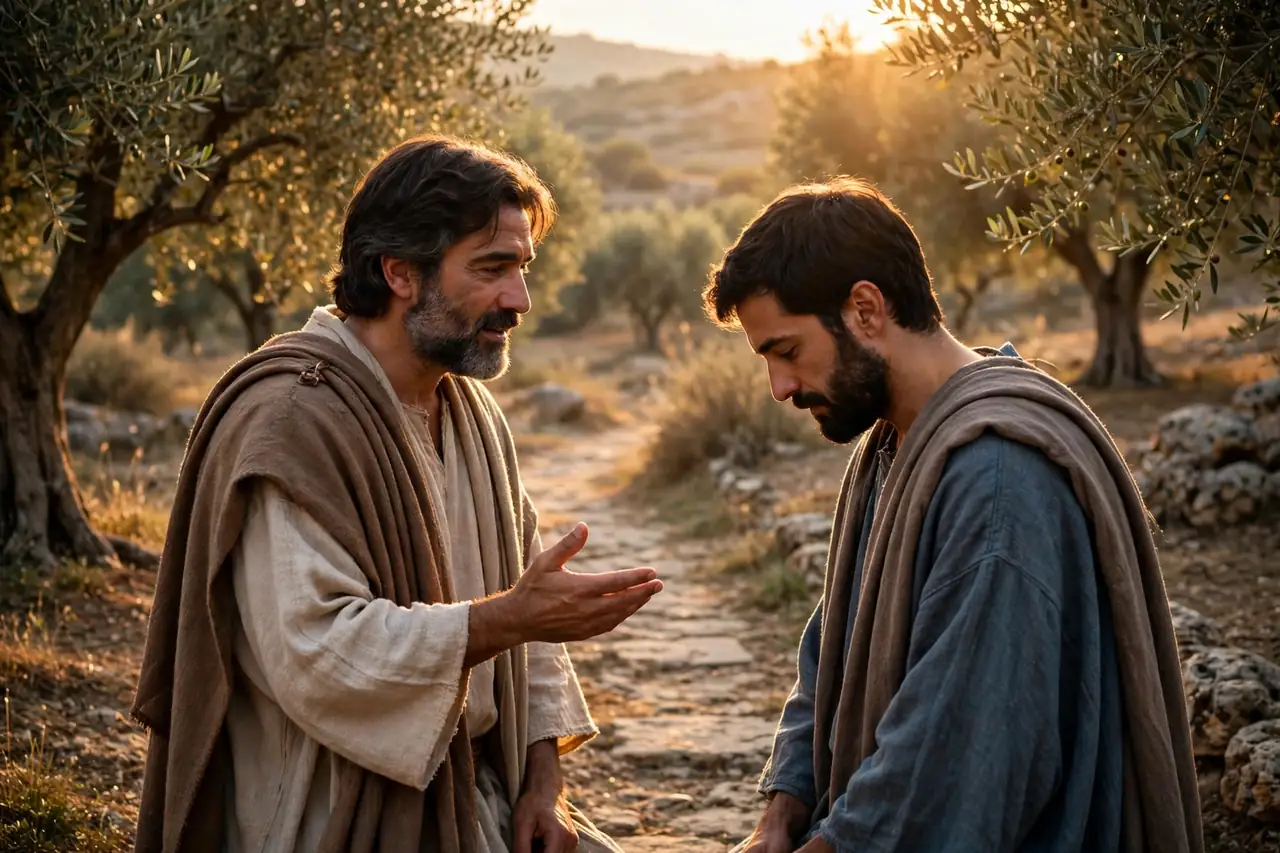
The Bible gives clear guidelines:
- Go privately first. “Go and tell him his fault between thee and him alone” (Matthew 18:15).
- Be gentle. “Restore such an one in the spirit of meekness; considering thyself, lest thou also be tempted” (Galatians 6:1).
- Check yourself first. Jesus warned about trying to remove a speck from someone’s eye while ignoring the beam in your own (Matthew 7:3-5).
- Show respect. “Rebuke not an elder, but intreat him as a father; and the younger men as brethren” (1 Timothy 5:1).
- Be patient. Rebuke “with all longsuffering” (2 Timothy 4:2).
- Aim to restore, not to shame. The goal is always to help the person come back to what is right.
Sometimes a firm rebuke is the right response to real wrongdoing. When Jacob had been cheated by his uncle Laban for twenty years, he finally confronted him directly. We tell that story in our article on chode meaning in the bible.
How Should We Receive a Rebuke?
Proverbs says how we respond to correction shows whether we are wise or foolish:
| Wise Response | Foolish Response |
|---|---|
| “Rebuke a wise man, and he will love thee” (Proverbs 9:8) | “Reprove not a scorner, lest he hate thee” (Proverbs 9:8) |
| “Whoso loveth instruction loveth knowledge” (Proverbs 12:1) | “He that hateth reproof is brutish” (Proverbs 12:1) |
| “The ear that heareth the reproof of life abideth among the wise” (Proverbs 15:31) | “He that refuseth instruction despiseth his own soul” (Proverbs 15:32) |
Proverbs often describes the person who refuses correction as stubborn and “froward.” We explain that word in our article on froward meaning in the bible.
Why Does God Rebuke His People?
God’s rebuke is a sign of His love, not His rejection:
“My son, despise not thou the chastening of the Lord, nor faint when thou art rebuked of him: For whom the Lord loveth he chasteneth.” (Hebrews 12:5-6, KJV)
“As many as I love, I rebuke and chasten: be zealous therefore, and repent.” (Revelation 3:19, KJV)
Just as a good parent corrects a child they love, God corrects His children so they can grow and avoid harm.
Is It Wrong to Rebuke Someone in Anger?
The Bible warns us to be careful. “The wrath of man worketh not the righteousness of God” (James 1:20). A rebuke given in uncontrolled anger usually hurts more than it helps.
Before correcting someone, it helps to ask:
- Am I calm enough to speak kindly?
- Do I want to help them, or just win the argument?
- Have I prayed about it first?
- Is this the right time and place?
Ephesians 4:15 sums up the right attitude: “speaking the truth in love.” Truth without love can wound; love without truth can leave someone in harm’s way. A good rebuke holds both together.
How Do Modern Bibles Translate "Rebuke"?
Most modern Bibles keep the word “rebuke” because it is still clear today. In some verses, they use “correct,” “reprove,” “warn,” or “sternly ordered.”
Frequently Asked Questions
What does rebuke mean in the Bible?
Rebuke means to sharply correct someone, express strong disapproval, or command something to stop. Jesus rebuked storms, sickness, and evil spirits.
Is it biblical to rebuke someone?
Yes. Leviticus 19:17 and Luke 17:3 tell believers to rebuke a brother who sins, but always gently, privately first, and with the goal of restoring them.
What does "The Lord rebuke thee" mean?
It means leaving the rebuke of evil to God’s authority rather than our own. Michael the archangel used these words against the devil (Jude 9).
Why did Jesus say "Get thee behind me, Satan" to Peter?
Peter tried to stop Jesus from going to the cross. Jesus rebuked the idea because it opposed God’s plan (Matthew 16:23).
Does God rebuke people He loves?
Yes. “As many as I love, I rebuke and chasten” (Revelation 3:19). His rebuke is a sign of care.
Conclusion
To “rebuke” in the Bible means to correct firmly or command something to stop. Jesus rebuked storms, sickness, and evil with simple words of authority. God rebukes His children because He loves them. And believers are called to rebuke one another gently, privately, and with the goal of restoring, not shaming. A wise person welcomes a loving rebuke, because, as Proverbs says, “Faithful are the wounds of a friend.”
Related Word Meanings
Keep exploring the King James Bible, one word at a time: