Decree Meaning in the Bible: Definition & Verse Examples
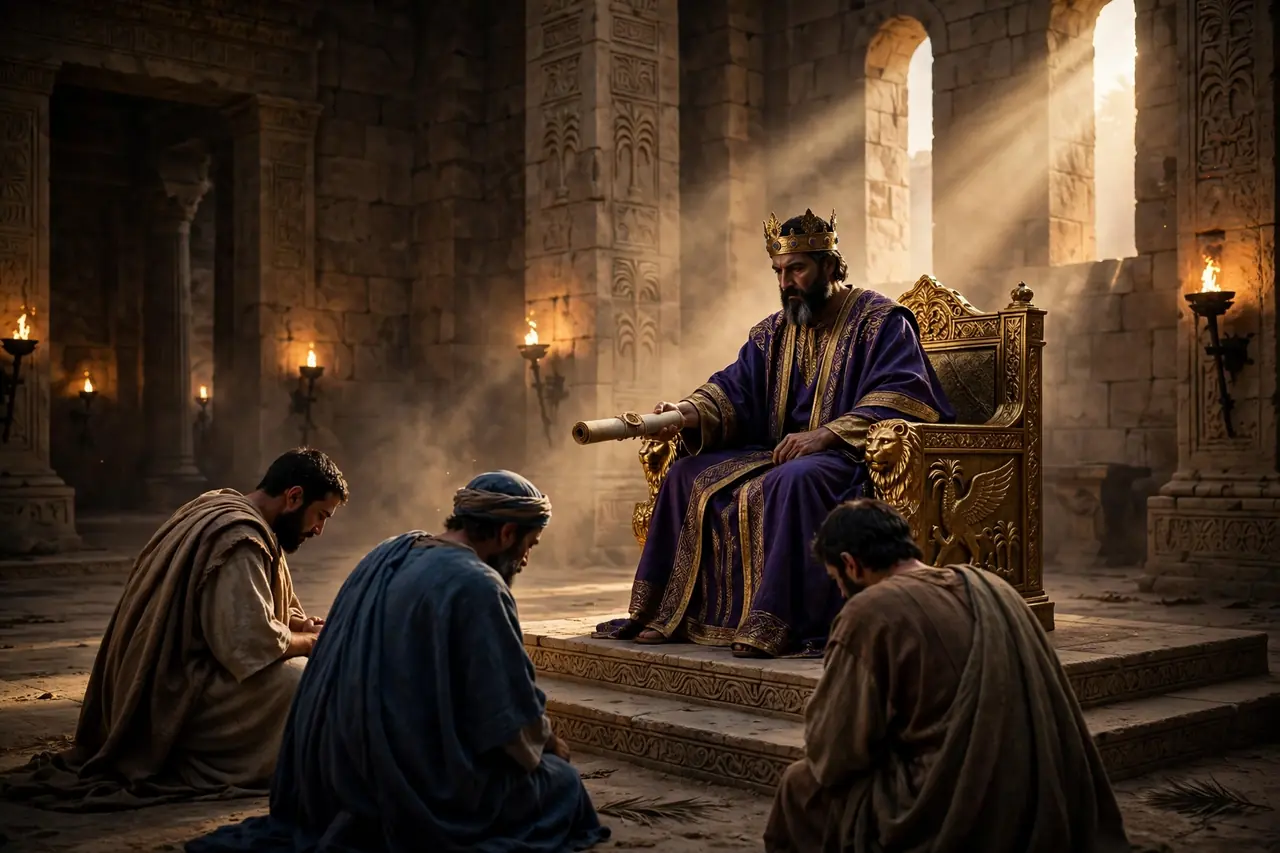
A “decree” in the Bible is an official order or ruling given by someone with authority, such as a king or God Himself. Once a decree was announced, people were expected to obey it. When the Bible speaks of God’s decrees, it means His firm plans and commands that will surely come to pass.
Decrees appear in some of the Bible’s most dramatic stories, from Daniel in the lions’ den to the birth of Jesus in Bethlehem. In this article, we explain what “decree” means in simple words, look at the key verses, and answer common questions, including what “decree and declare” means.
What Does "Decree" Mean in Simple Words?
A decree is an official order that must be followed. In Bible times, it was usually:
- Given by a ruler, like a king, emperor, or God
- Written down or announced in public
- Backed by power, so breaking it brought punishment
- Hard or impossible to cancel once it was made
Today, we might compare a decree to a law, a court ruling, or an executive order. The main idea is the same: someone with authority has spoken, and people must respond.
“Decree” can be a noun (“the king’s decree”) or a verb (“to decree a law”). Both forms appear in the Bible.
What Is the Hebrew and Greek Meaning of Decree?

The KJV uses “decree” for several words in the original languages. Some parts of Daniel and Ezra were written in Aramaic, a language close to Hebrew, so a few of these words are Aramaic.
| Original Word | Language | Meaning | Example |
|---|---|---|---|
| Choq | Hebrew | A fixed rule, something engraved | Psalm 2:7, Psalm 148:6 |
| Dath | Hebrew (from Persian) | A royal law or edict | Esther 3:15, Esther 8:14 |
| Gezerah | Aramaic | A decision, a ruling | Daniel 4:17, 4:24 |
| Te’em | Aramaic | An order, a command | Ezra 6:1, Daniel 3:10 |
| Esar | Aramaic | A ban, a binding order | Daniel 6:7-9 |
| Dogma | Greek | An official public order | Luke 2:1, Acts 16:4 |
The Hebrew word “choq” comes from a root that means “to carve” or “engrave.” That gives a strong picture. A decree was like words cut into stone. It was fixed and lasting.
The Greek word “dogma” is where we get the English word “dogma,” meaning a firm teaching or rule.
What Is the Difference Between a Decree and a Law?
The two words are very close, and the Bible sometimes uses them side by side. A simple way to see the difference:
- A law is a general rule for how people should live.
- A decree is often a specific order given at a certain time for a certain purpose.
For example, the laws God gave Moses guided Israel’s whole way of life. A king’s decree, like Darius’s order in Daniel 6, was a single command for a particular situation.
What Are the Most Famous Decrees in the Bible?
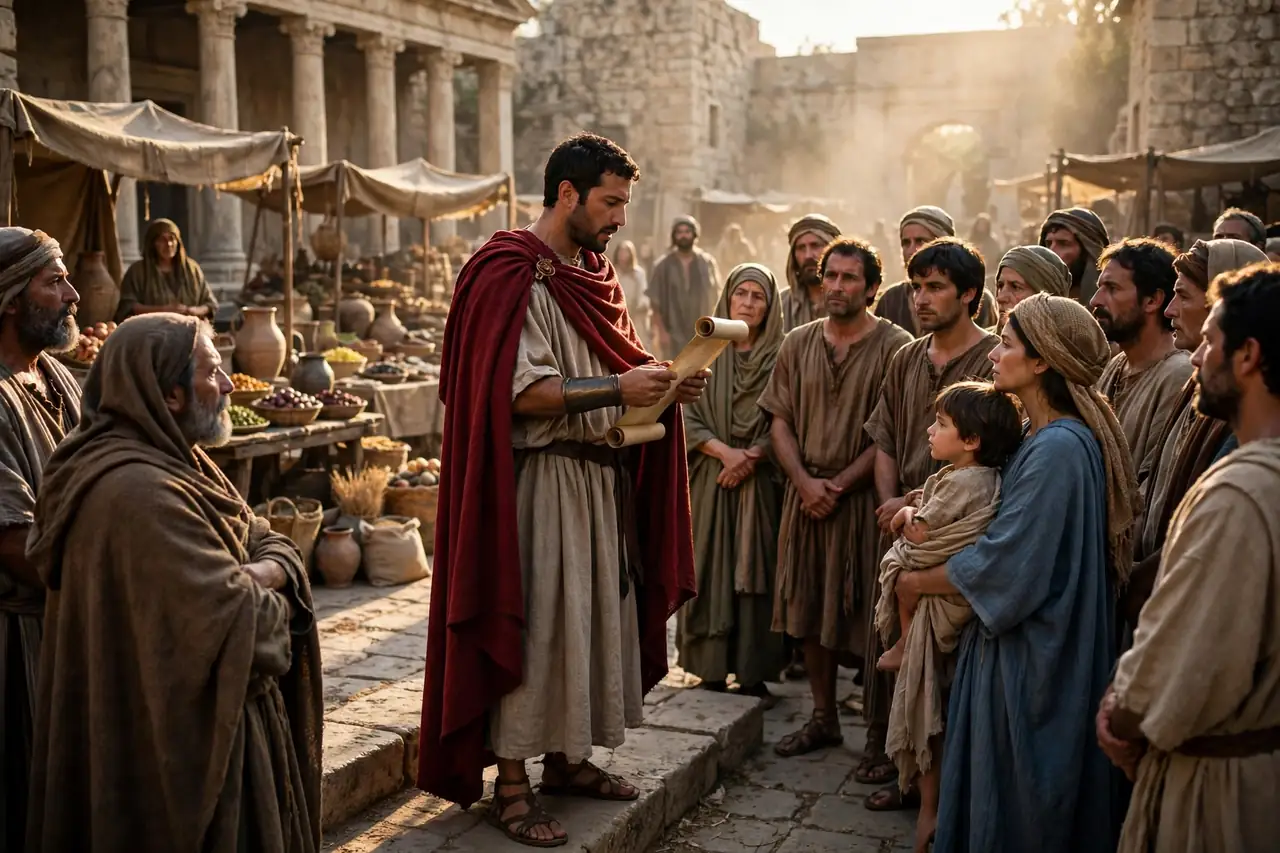
Several Bible stories turn on a king’s decree. Here are the best-known ones.
Daniel 6 – The Decree That Sent Daniel to the Lions
Jealous officials convinced King Darius to sign a decree that no one could pray to any god or man except the king for 30 days. They knew Daniel prayed to God every day.
“Now, O king, establish the decree, and sign the writing, that it be not changed, according to the law of the Medes and Persians, which altereth not.” (Daniel 6:8, KJV)
Daniel kept praying anyway, and he was thrown into the lions’ den. Even the king could not cancel his own decree. But God shut the lions’ mouths, and Daniel was saved. Afterward, Darius made a new decree that everyone should honor Daniel’s God (Daniel 6:26).
Esther – A Decree That Could Not Be Reversed
An evil official named Haman tricked King Ahasuerus into sending out a decree to destroy all the Jews in the Persian Empire (Esther 3:13). Because a Persian royal decree could not be undone, Queen Esther and Mordecai faced a huge problem.
The solution was a second decree. The king allowed the Jews to defend themselves (Esther 8:11). The first decree still stood, but the second one turned the danger around. That victory is still remembered today in the Jewish feast of Purim.
Ezra 1 – Cyrus's Decree to Rebuild the Temple
After many years in exile, King Cyrus of Persia issued a decree allowing the Jews to go home and rebuild God’s temple in Jerusalem (Ezra 1:1-3; 5:13). The Bible says “the LORD stirred up the spirit of Cyrus” to do it.
Later, when the work was challenged, King Darius searched the records and found Cyrus’s decree (Ezra 6:1-3). The building went ahead.
Luke 2:1 – The Decree That Brought Jesus to Bethlehem
“And it came to pass in those days, that there went out a decree from Caesar Augustus, that all the world should be taxed.” (Luke 2:1, KJV)
This decree ordered a census. Joseph had to travel with Mary to Bethlehem, his family’s hometown. Because of that, Jesus was born in Bethlehem, just as the prophet Micah had said hundreds of years earlier (Micah 5:2).
What Do These Royal Decrees Teach Us?
These stories share a clear message: God is in control, even over the orders of powerful kings.
- Darius’s decree could not stop God from saving Daniel.
- Haman’s decree could not wipe out God’s people.
- God moved Cyrus’s heart to send His people home.
- Caesar’s decree put Jesus’ birth exactly where God had promised.
Proverbs 21:1 says, “The king’s heart is in the hand of the LORD.” We explore this truth further in our article on sovereign meaning in the bible.
What Are God's Decrees in the Bible?
The Bible also speaks of decrees made by God. These are His firm plans and commands that no one can overturn.
God’s decrees cover many areas:
- Nature: “He hath also stablished them for ever and ever: he hath made a decree which shall not pass” (Psalm 148:6). God set the order of the sun, moon, and stars.
- Weather: God “made a decree for the rain” (Job 28:26).
- The sea: God “gave to the sea his decree, that the waters should not pass his commandment” (Proverbs 8:29).
- Kings and nations: Daniel told Nebuchadnezzar that his coming humbling was “the decree of the most High” (Daniel 4:24).
Unlike human decrees, God’s decrees are always wise, good, and fair. Many Christians also use the phrase “God’s decrees” to describe His eternal plan for the world, based on verses like Ephesians 1:11, which says God “worketh all things after the counsel of his own will.”
What Does "I Will Declare the Decree" Mean in Psalm 2:7?
“I will declare the decree: the LORD hath said unto me, Thou art my Son; this day have I begotten thee.” (Psalm 2:7, KJV)
In this psalm, God’s chosen King announces God’s official decree. The decree is that this King is God’s Son and will rule the nations.
The New Testament applies this verse to Jesus. Acts 13:33 links it to His resurrection, and Hebrews 1:5 uses it to show Jesus is greater than the angels. We explain the word “begotten” in this verse in our guide on begotten meaning in bible.
What Does the Bible Say About Unjust Decrees?
Not every decree in the Bible is good. God strongly warns leaders who use their power to make unfair laws:
“Woe unto them that decree unrighteous decrees, and that write grievousness which they have prescribed; To turn aside the needy from judgment, and to take away the right from the poor of my people, that widows may be their prey, and that they may rob the fatherless!” (Isaiah 10:1-2, KJV)
God cares deeply about the poor, widows, and orphans. In fact, His own law included special rules to protect them, such as leaving part of every harvest for them to gather. We explain those rules in our article on glean meaning in the bible.
Proverbs 8:15 shows the right way to use power: “By me kings reign, and princes decree justice.” Good leaders make decrees that are fair and protect the weak.
What Does "Thou Shalt Also Decree a Thing" Mean in Job 22:28?
“Thou shalt also decree a thing, and it shall be established unto thee: and the light shall shine upon thy ways.” (Job 22:28, KJV)
This verse is popular in some churches today. It is often used in prayers where believers “decree and declare” God’s promises over their lives.
To understand it well, it helps to know the context:
- Who said it: These words were spoken by Eliphaz, one of Job’s friends, not by God directly.
- What he meant: Eliphaz was telling Job that if he turned back to God, his prayers would be answered and his plans would succeed.
- What God said later: In Job 42:7, God said Job’s friends had not spoken rightly about Him. This does not mean every word they said was false, but it means their speeches should be read with care.
Christians understand this verse in different ways. Some see it as encouragement to speak God’s promises with faith. Others stress that prayer is not about commanding outcomes but about trusting God’s will, as Jesus prayed, “not my will, but thine, be done” (Luke 22:42). Most agree on one point: a believer’s words have power only when they line up with what God has already said.
Frequently Asked Questions
What does decree mean in the Bible?
A decree is an official order or ruling from someone with authority, such as a king or God. It was meant to be obeyed and was often impossible to cancel.
What is the Hebrew word for decree?
One common Hebrew word is “choq,” which comes from a root meaning “to engrave.” It describes a fixed, lasting rule.
What decree sent Daniel to the lions' den?
King Darius signed a decree that no one could pray to any god or man except the king for 30 days. Daniel kept praying to God and was thrown to the lions (Daniel 6).
What was the decree in Luke 2:1?
Caesar Augustus ordered a census of the Roman world. It led Joseph and Mary to Bethlehem, where Jesus was born.
What does "decree and declare" mean?
It is a modern prayer phrase, often based on Job 22:28, where believers speak God’s promises aloud in faith. Christians hold different views on how this verse should be applied.
Can God's decrees be changed?
The Bible presents God’s plans as firm and sure (Isaiah 46:10). At the same time, it shows God responding to prayer and repentance, as when He spared Nineveh (Jonah 3:10).
Conclusion
A “decree” in the Bible is an official order from someone with authority. Kings made decrees that shaped history, from Darius and the lions’ den to Caesar Augustus and the census that brought Jesus to Bethlehem. Yet behind every human decree stood the greater decree of God, whose plans never fail. The Bible also warns rulers against unjust decrees and calls them to protect the weak. For believers, the message is comforting: no earthly order can overrule what God has promised.
Related Word Meanings
Keep exploring the King James Bible, one word at a time: